SS Montgomery - in the news - how Insurer of State responds
SS Montgomery – Unexploded Ordnance (UXO) Risk. In the news...
SS Montgomery – Unexploded Ordnance (UXO) Risk
We would like to thank The Telegraph’s Tim Sigsworth for raising awareness about SS Montgomery. As it stands, it is one of the largest macroeconomic contingent liabilities held by HM Government—that is, the Liberty ship SS Montgomery. The following is an excerpt from our ongoing white paper, Chapter 5: Government Losses and Risk Transfer.
During the Second World War, more shipping was lost in a short space of time than in any other period in history. Each and every wreck, as well as other UXO dumps (such as Beaufort’s Dyke), represents a risk and liability on the State’s balance sheet. The private insurance market would certainly not pay for the losses that might arise to private or commercial policyholders from these risks. There are few more pertinent examples of these ongoing and unmanaged risks than a single vessel in the Thames Estuary.
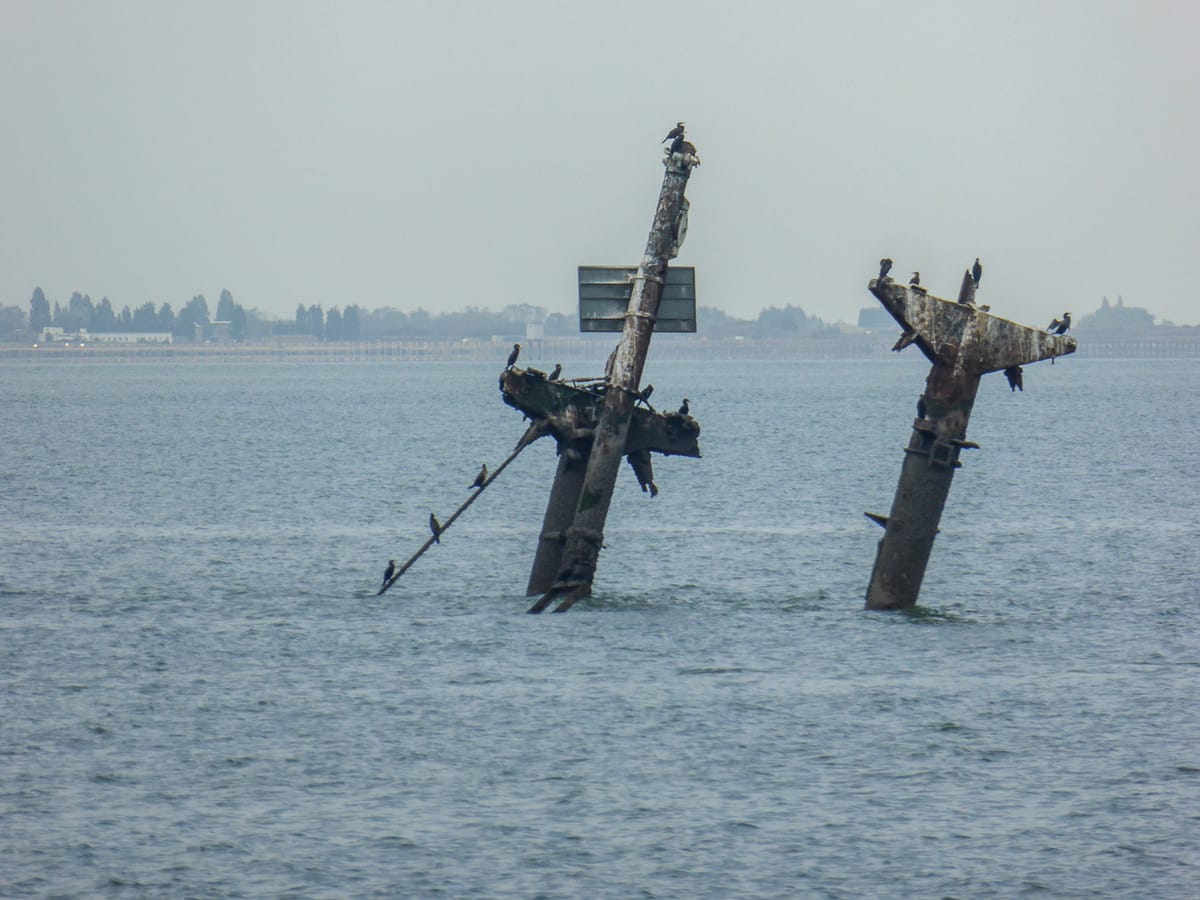
In August 1944, a US-built Liberty cargo ship, laden with 7,000 tons of munitions, was part of convoy HX-301. She was directed to anchor in the Great Nore anchorage off Sheerness. Sadly, she dragged her anchor and ended up grounded on a sandbank. Half of the cargo was successfully salvaged before the vessel flooded completely. Today, according to the Government, approximately 1,400 tons of explosives remain on the wreck.
SS Montgomery therefore represents a latent contingent liability for the UK Government. In a report written by Professor David Alexander of the Department of Risk and Disaster Reduction (RDR) at UCL, it is alarmingly noted that the risk is not truly known:
“The conclusion of this investigation is that the data needed for a rigorous assessment of risk using standard procedures do not exist and probably cannot be collected.”
Were this a commercial risk being considered in the private sector, an underwriter of reasonable and rational mindset would view the risk as definitively uninsurable. Yet, day by day, the UK Government is effectively underwriting the potential losses that would arise from the wreck exploding. No reserving is made, but calculations are—we have spoken to the actuary responsible.
This risk, as well as a high number of other similar maritime wreck risks, poses a significant threat to the UK’s balance sheet should they come to fruition. Arguably, the Insurer of State and its Loss Purpose Vehicles could be used pre-emptively to mitigate the risk by creating capital to clean up and further de-risk the wreck site.
If you are unfamiliar with how the Insurer of State would respond to such a loss, please direct your interest towards the summary post herein.